Through two assignments at United Nations Industrial Development Organization (UNIDO) in China and Farmers Conservation Alliance (FCA) in Oregon, I provided engineering support to policy movements aimed at putting water infrastructure development on a sustainable track. At UNIDO I researched small hydropower development for nearly every country in the world and helped bring this information online. At FCA one of my favorite contributions mapped out hydropower potential by quantifying this renewable energy resource in networks of irrigation canals.
Farmers Conservation Alliance is a non-profit organization with a pragmatic approach to modernize the way irrigation water in Oregon gets delivered to farmers. The values and expertise of FCA aligns well with my own. My background in both irrigation and hydropower engineering and affinity for innovative tasks in water resources made this an ideal assignment for me. I provided engineering support to both branches of the organization – the irrigation modernization program and the proprietary “Farmers Screen” fish screen.
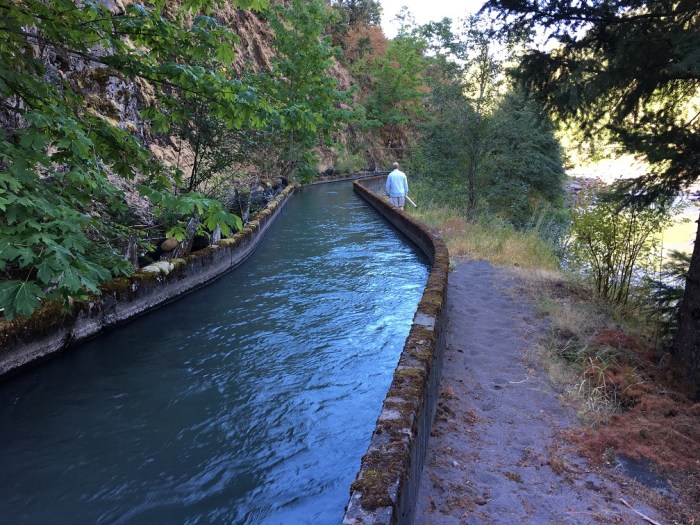
The irrigation modernization takes a big-picture approach to better direct water infrastructure funding to win-win solutions. A typical master-planned project in the program seeks out holistic infrastructure upgrades that restore streams, generate low-impact hydropower, and increase usability for the irrigators rather than look at these issues in isolation. Converting open irrigation to canals to pipelines, for instance, allows both the irrigation water and the energy released by this descending water to be used in more productive ways. My contributions to the program came through the way I clarified large geospatial datasets to process these data into maps and infographics.
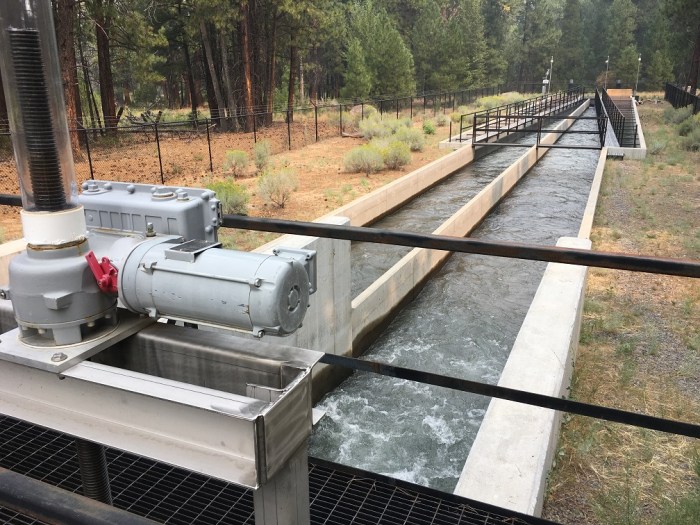
In my support for the Farmers Screen, I used my knowledge of hydraulic engineering to put this unique technology to use in new and larger applications. The Farmers Screen is a low impact method for drawing water from rivers without damming the rivers. It uses clever hydraulics to separate fish and debris from water being diverted for beneficial use, and is able to clean itself simply without the need for external power or complex machinery. I broke down the different functions of the screen to described its operation mathematically and thereby bring theory and logic to an empirically developed hydraulic structure.
During my exchange program with UNIDO’s International Center for Small Hydropower in Hangzhou, China, I helped develop the World Small Hydropower Development Report and bring it online at http://www.smallhydroworld.org. The report compares scope and methods for hydropower development internationally, with a special focus on small hydropower development and its potential to advance rural and underdeveloped communities worldwide. In the image below I joined engineers and planners from Nigeria and Ethiopia on a tour of a Chinese power plant in Zhejiang Provence.

 Haakon Ogbeide